By the Omega III Team · Elgin, IL · Demolition & Environmental Contractors · 6 min read
Every developer knows to compare bids. Fewer know how to compare contractors. When demolition is the first critical step in a redevelopment, the work that sets the stage for everything that follows, choosing on price alone is one of the most expensive decisions you can make. The savings on the front end rarely survive contact with the actual project.
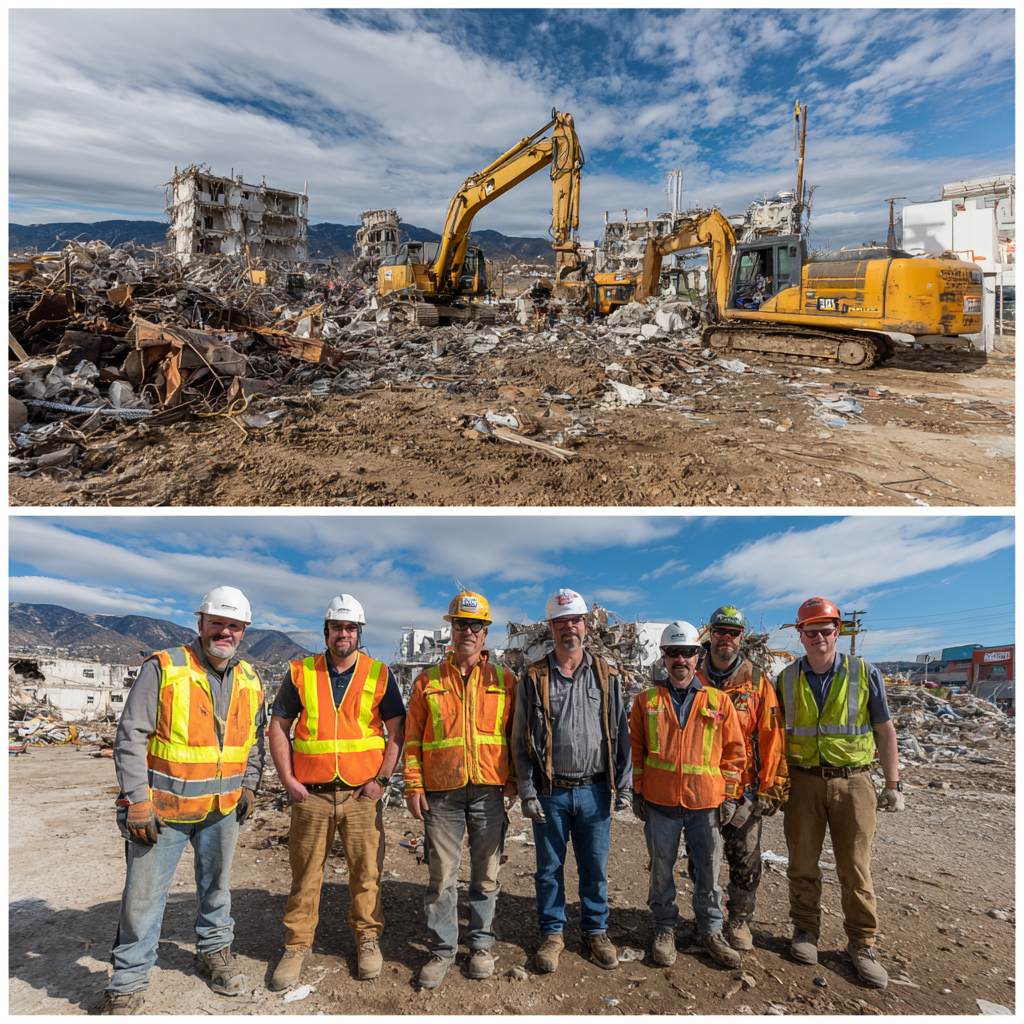
With over $900 million in work performed across the country, Omega III has seen firsthand what happens when the wrong contractor gets the job. The fallout doesn’t stay in the demolition phase. It follows a project all the way through to certificate of occupancy, and sometimes beyond.
The Four Mistakes Developers Make When Choosing a Demo Contractor
These aren’t hypothetical pitfalls. They’re the patterns that surface repeatedly on troubled projects, and they’re almost always traceable to the contractor selection decision.
01 : Hiring without proven large-scale experience
A contractor who’s done small selective demolition jobs is not equipped to manage a high-rise teardown, a bridge removal, or a contaminated industrial site. Complexity requires a different tier of equipment, expertise, bonding capacity, and crew management, and that gap shows up fast. See our projects for what that tier of work actually looks like.
02 : Overlooking safety and compliance history
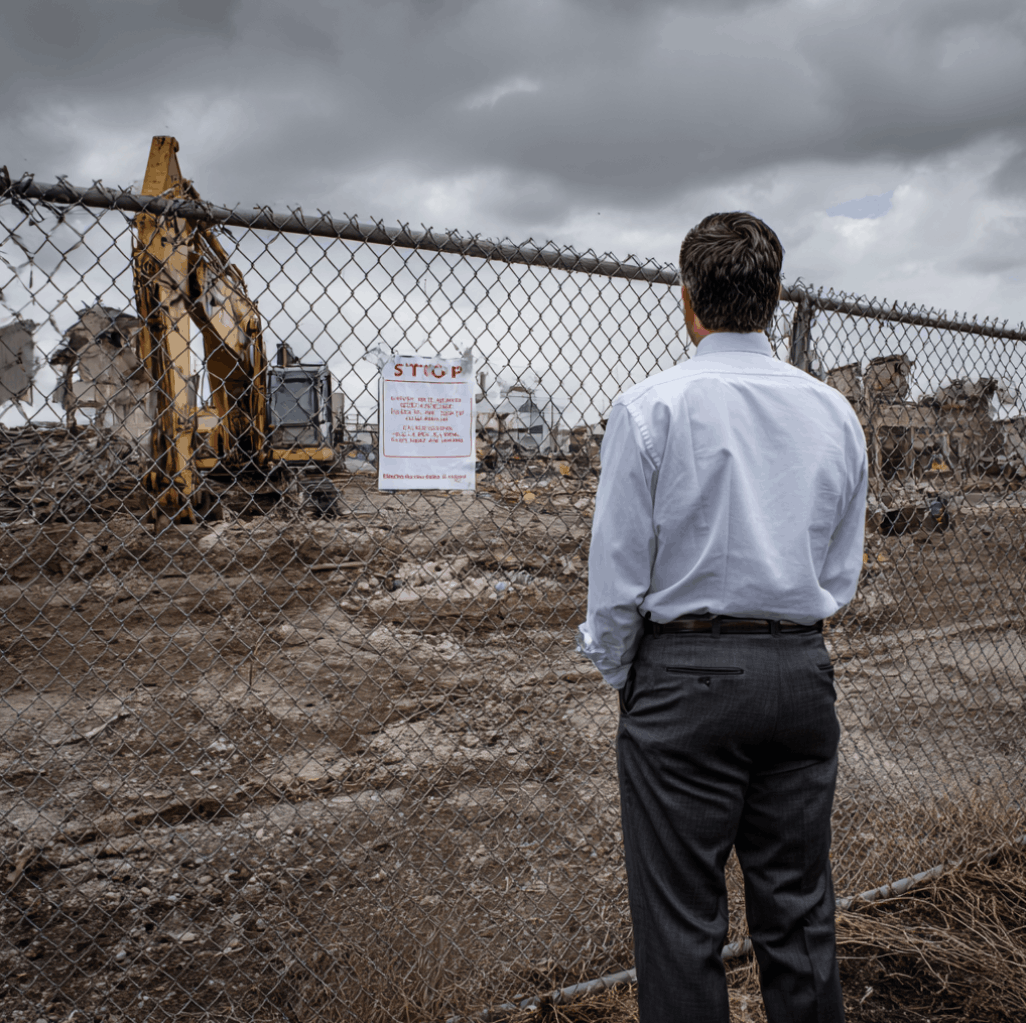
OSHA violation records are public. A contractor with a pattern of citations, stop-work orders, or EMR scores above 1.0 is a liability risk you’re absorbing the moment they step onto your site. In Illinois, that risk can land directly on the developer as the site owner. We covered that exposure in depth in our guide to OSHA compliance for developers.
03 : Ignoring sustainability and recycling practices
Many municipalities now require demolition waste diversion plans. A contractor without a structured asset recovery process may leave you out of compliance, or with landfill disposal costs that should have been offset by scrap value.
04 : Choosing upfront price over long-term risk
The lowest bid is built on assumptions. If those assumptions are wrong, and on complex sites they often are, the cost of being wrong lands on you, not the contractor. Change orders, schedule overruns, and rework aren’t covered by a low bid. Thorough pre-demolition planning is what turns those assumptions into known numbers before the contract is signed.
What the Wrong Contractor Actually Costs
Let’s make this concrete. These aren’t worst-case catastrophe numbers. They’re the kinds of costs that show up routinely when contractor selection goes wrong on mid-to-large commercial redevelopments.
| Risk | Typical exposure | What drives it |
|---|---|---|
| Unplanned hazmat discovery | $200K–$500K+ | When a contractor skips or rushes the pre-demo survey, regulated materials show up mid-project. Emergency abatement costs 3–5x planned abatement, plus 6–8 weeks of schedule loss. |
| OSHA violations & fines | $16K–$160K per citation | Willful or repeat violations can reach $160K per citation, and developers as site owners can be held jointly liable. Reputational damage with municipal partners is harder to quantify but lasts longer. |
| Schedule overrun carrying costs | $50K+/week | At $50K or more per week in carrying costs, a 4-week demo delay costs $200K before a single change order is written. A missed GC mobilization window can push your opening back months. |
| Bonding & insurance gaps | Uncapped exposure | An under-bonded or underinsured contractor leaves you holding liability on property damage, third-party claims, and environmental incidents. This is where low bidders most often cut corners invisibly. |
| Landfill & disposal overages | $50K–$300K | Contractors without structured material recovery programs dump everything, including steel, concrete, and copper with real market value. You pay tipping fees that a better contractor would have converted to salvage credits. |
| Potential total exposure on a single project: $500K – $1M+ |
| That low bid that saved $80,000 on the front end? It may have just committed your project to seven figures in exposure. This is the math developers run after the fact. Omega III runs it before the bid goes out. |
How to Actually Evaluate a Demolition Contractor
Price is one data point. Here’s what a thorough contractor evaluation actually looks like, and how Omega III stands up against each criterion.
| Evaluation Criteria | Low-Bid Contractor | Omega III LLC |
|---|---|---|
| Large-scale project experience | ✕ Limited or unverified | ✓ $900M+ completed work |
| OSHA compliance record | ✕ Often unchecked | ✓ Rigorous safety program, strong EMR |
| Bonding & insurance capacity | ✕ May be underinsured | ✓ Full bonding, zero rejections on record |
| In-house hazmat abatement | ✕ Subcontracted or skipped | ✓ Licensed asbestos & lead teams in-house |
| Material recovery program | ✕ Minimal or none | ✓ Structured asset recovery & scrap mgmt |
| Emergency response | ✕ Limited or unavailable | ✓ Dedicated operations team, rapid response |
| Union workforce & training | ✕ Variable, unverified | ✓ Local, diverse, continuously trained crews |
| Industry recognition | ✕ None cited | ✓ IDOT Subcontractor of the Year; CDR Magazine |
Our full safety program documentation and asbestos & lead abatement licensing are available on request for any project under evaluation.
The Proof Is in the Projects
Omega III’s track record isn’t self-reported. It’s documented by the GCs and agencies who’ve relied on us for decades. Walsh Construction, Kiewit, and the Illinois Central Contractors have all put their names behind our work publicly.
| IDOT Subcontractor of the YearAwarded for the demolition of a three-unit, 8-span concrete bridge structure over I-94/90 at the Ohio Street Interchange in Cook County, completed ahead of schedule.Illinois Road & Transportation Builders Association | Walgreens Corporate CampusSelected for the high-profile redevelopment of the Walgreens Corporate Campus in Deerfield, IL, one of the region’s most visible commercial redevelopment projects.Deerfield, IL, active project | Industry RecognitionFeatured in Construction & Demolition Recycling Magazine for Omega III’s reputation as the contractor that takes on fast-paced, high-complexity projects and delivers.C&D Recycling Magazine, 2026 |
| “Chuck has proven his extensive knowledge and experience in the demolition field on every single project we’ve successfully completed together.”Dan Lucas, Vice President, 20-year client |
Questions to Ask Before Signing Any Demo Contract
Before your next project goes to bid, here’s the due diligence checklist that separates real demolition contractors from companies that can do simple jobs but will struggle with yours:
| CONTRACTOR DUE DILIGENCE CHECKLISTAsk these before you sign, and verify the answers.✓ What is your total dollar volume of completed work, and can you provide project references at this scale?✓ What is your current EMR (Experience Modification Rate) and OSHA incident rate?✓ Do you carry your own bonding, and have you ever had a bond rejected?✓ Is hazardous material abatement handled in-house, or subcontracted?✓ What is your material recovery and recycling process, and will you share the salvage credits?✓ Can you serve as prime contractor and manage the full scope, or are you subcontracting major components?✓ What is your emergency response capability if something goes wrong on site?✓ Are your crews union, and do they receive continuous training in current safety standards? |
Question three is the one most developers skip, and it’s the one that most often predicts how a project ends. A contractor’s answer on schedule commitment is worth the same scrutiny; our approach to demolition schedule management explains why.
The Bottom Line
Choosing a demolition contractor isn’t a procurement decision. It’s a risk management decision. The bid is just the starting point. What you’re really evaluating is how much of the project’s downside risk you’re transferring to a qualified partner, and how much you’re keeping on your own books by default. If you’re earlier in the process, our Demolition 101 guide for developers covers what the scope actually involves.
Omega III LLC has been the answer to that question for Walsh Construction, Kiewit, the Illinois Department of Transportation, and dozens of developers across Illinois, Wisconsin, and Missouri. With over $900 million in completed work, a zero-bond-rejection record, and more than a century of combined management experience based out of Elgin, IL, we’re not the cheapest option. We’re the one that costs less in the end.
Call us at (630) 837-3000, email estimating@omega3llc.com, or talk through your next project before the bids go out.
| Don’t let the wrong contractor put your project at risk.Talk to Omega III before you award the demo contract.(630) 837-3000 · estimating@omega3llc.com · omega3llc.com/contact |